
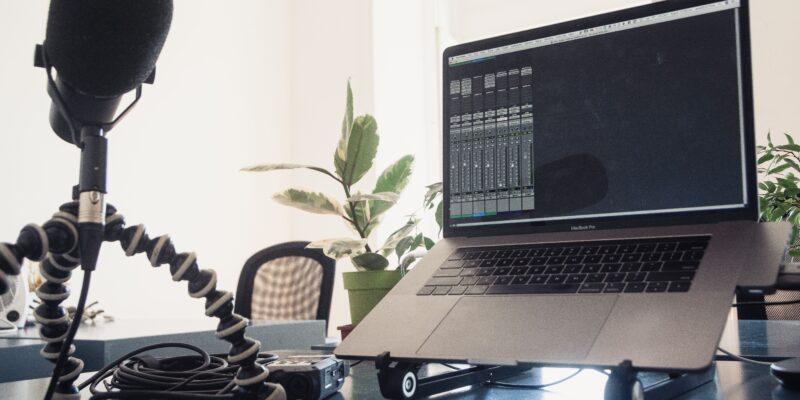
If you’re concerned about being misquoted by a journalist, should you record the interview yourself? And how far should your PR adviser go to protect you during that conversation?
Phoebe Netto, founder of Pure Public Relations, was recently invited to a premiere of You Can See Everything, the documentary featuring Theranos founder Elizabeth Holmes, ahead of its Australian cinema release this Thursday. A dispute in the film raises some useful questions about accuracy, editorial independence and our appetite for controlling how we’re portrayed.
And don’t worry, there are no spoilers here. Nothing is being given away. But it is what’s noteworthy in PR this week.
A disputed quote
In the documentary, a quote attributed to Holmes is disputed, and viewers hear that her side has its own recordings of the interview. We won’t reveal what those recordings show or whether the complaint holds up.
It does, however, provide an opportunity to examine a practice that some people regard as sensible protection and others see as unnecessarily defensive: recording your own media interview.
Why people record their own interviews
There are legitimate reasons to do it.
Some people want to review their performance afterwards. They may wish to assess the clarity of their explanations, identify missed opportunities or discover just how long they took to answer a relatively straightforward question.
More often, they want a record they can refer to if there’s a disagreement about what they said. That can be a wise precaution, particularly when taking part in a contentious or potentially negative story.
And a potentially negative story isn’t necessarily an interview to avoid. There may be allegations to address, decisions to explain or inaccuracies that would otherwise go unchallenged. Sometimes responsible reputation management requires you to front up to an uncomfortable conversation.
Be open about it
If you decide to record the interview, tell the journalist beforehand. A straightforward “I’m recording this for my own records” establishes that transparently.
You should already assume that the journalist may be recording you. That is an ordinary part of being interviewed, and keeping an accurate record is part of their job. There’s no need to establish a special arrangement for that.
Your own recording gives you evidence to refer back to. It doesn’t give you editorial approval, or the right to withdraw an accurate quote because, on reflection, you would prefer not to have said it.
That distinction matters, because the desire for accuracy can very easily become a desire for control.
The PR adviser on the line
Which brings us to the PR person sitting in on the interview.
Often, that involves setting up a three-way call and remaining on the line to listen. Sometimes the PR adviser interrupts, redirects a question or attempts to answer on the spokesperson’s behalf.
Journalists understandably find that frustrating. They’ve arranged to interview someone with relevant knowledge or responsibility, only to discover that the conversation comes with a chaperone.
Pure Public Relations has had a client ask the agency to sit in on interviews, and it refused. Trying to dictate how an interview is conducted or recorded rarely ends well. It can stifle a useful conversation, undermine the spokesperson’s credibility, and introduce an adversarial dynamic when there is no reason for one.
The agency’s responsibility is to prepare the person being interviewed: interrogate their claims, anticipate difficult questions, check the facts, and help them communicate precisely.
If a business spokesperson needs a PR adviser to intervene whenever the conversation becomes challenging, their preparation needs revisiting, or the business should reconsider who is speaking.
Earned media comes with independent editorial judgement. Commissioning PR support doesn’t entitle a business to supervise the journalist.
When support is the right call
There is an important exception to this approach: supporting someone vulnerable.
A young person experiencing homelessness, for example, may be discussing deeply personal and distressing experiences. Their wellbeing needs to be considered during the interview, as do the implications of having their story available online for years afterwards.
In those circumstances, the agency may arrange for a member of its team, a caseworker or someone who understands the person’s situation to be present. That is negotiated with the journalist beforehand, with a clear understanding of the support person’s role. In the agency’s experience, journalists are very understanding of those arrangements.
This is a substantive welfare consideration, rather than an executive’s discomfort with being challenged.
How spokespeople can reduce the risk of being misquoted
There is also plenty that spokespeople can do themselves to reduce the likelihood of being misquoted, and media training should cover it.
An inaccurate quote doesn’t automatically establish malicious intent. Sometimes a sprawling answer obscures the point. A qualification gets separated from the claim it qualifies. An explanation is condensed in a way that inadvertently changes its meaning.
Journalists remain responsible for accuracy, but spokespeople can make accuracy considerably easier:
- Answer the question directly before expanding on it.
- Use language that is intelligible beyond your own organisation.
- Keep an essential qualification alongside the claim, rather than introducing it several minutes later.
- If you realise you’ve said something incorrectly, correct it explicitly during the interview.
Clarity offers considerable protection against misunderstanding, although it cannot guarantee that you’ll like the resulting coverage.
When someone’s credibility is already compromised, as Holmes’s is, their account warrants rigorous scrutiny. An assertion that they have been misquoted deserves scrutiny too.
A contemporaneous recording allows a disputed quote to be checked against what was actually said. But anyone invoking that record needs to accept that it may vindicate the journalist.
The takeaway
Where the circumstances warrant it, keep your own recording and tell the journalist you’re doing so. But put at least as much effort into the substance and precision of your answers as you put into preserving evidence of them.
The strongest protection you can take into an interview is an account that withstands scrutiny, delivered by someone equipped to explain it.