
Sydney and large parts of New South Wales have been hit by extraordinary weather events recently. Severe storms, widespread damage and devastating human impact have quite rightly dominated headlines and editorial attention.
This coincides with the opening of the new and improved Sydney Fish Markets, which they have been wanting (for a long time now) to have strong media saturation for to encourage buzz and visits.
At the same time, the reopening has coincided with the Australian Open. Entirely predictable, but still enormously dominant in terms of attention and airtime across mainstream media.
So you have one unpredictable, highly disruptive event and one very predictable but equally consuming event, both competing for attention at the exact moment the Sydney Fish Markets are trying to relaunch a major, long-anticipated redevelopment.
And yet, they’ve still managed to secure strong, positive coverage.
That doesn’t happen by accident.
Understanding the media landscape
What stands out is how clearly they understand the way the media works, particularly in a crowded and volatile news cycle. Rather than relying solely on reactive coverage around opening day, they’ve invested heavily in longer lead-time features.
Before getting into that strategy, it’s worth pausing on the scale of the project itself.
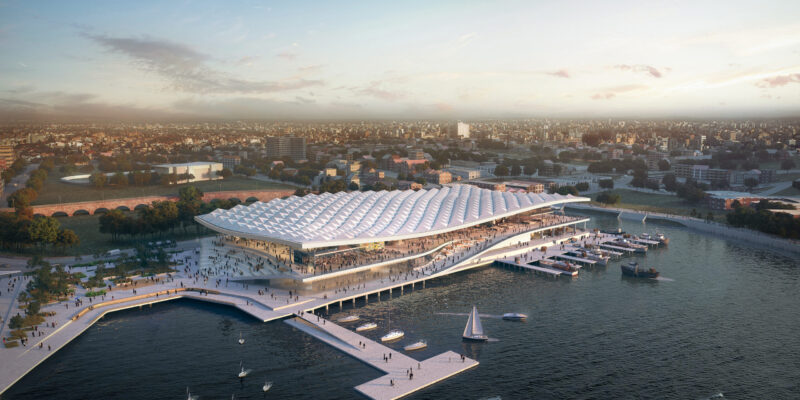
The new Sydney Fish Market is one of the largest urban redevelopment projects Sydney has seen in recent years. It replaces the ageing Pyrmont site with a purpose-built, world-class facility designed to operate as both a working wholesale market and a major food, dining and tourism destination. The development significantly expands public access, hospitality offerings and experiential elements, and is expected to attract millions of visitors each year.
That scale alone makes it inherently newsworthy, but scale doesn’t guarantee coverage, particularly in a saturated media environment.
The power of longer lead times
From a PR perspective, the smart move has been securing longer lead pieces under embargo. By inviting journalists in ahead of opening, when there is time to properly explore the site, they’ve given media the opportunity to develop richer stories without the pressure of a live launch environment. Once a journalist has invested that time and effort, those pieces are far more likely to run, even when breaking news threatens to crowd everything else out.
Crucially, they haven’t treated media as a single audience. Different outlets have been given different angles. Some stories focus on the cooking school and food education elements. Some the glitz and scale. While others lean into the economic, infrastructure and tourism impact of the redevelopment. Business outlets have explored the commercial model and long-term viability, while design and architecture media have focused on the building itself and its place in Sydney’s harbour landscape.
That level of tailoring matters. If you send the same story to multiple outlets, journalists will simply step away once a competitor has covered it. But when each outlet has its own distinct angle, spokesperson and content package, you dramatically increase the volume and diversity of coverage you can achieve.
They’ve also clearly thought about format. Some outlets need strong video assets. Others want long-form written features. All of that content has been prepared in advance, making it easier for journalists to publish when the timing is right.
Maintaining momentum beyond launch day
Alongside those longer lead pieces, they’re also pursuing more immediate, reactive opportunities. These are inherently less predictable and more vulnerable to being displaced by weather events or sport, but they play an important role in maintaining momentum and visibility as the opening approaches.
What’s particularly savvy is the longer-term view. Based on how the Sydney Fish Markets have operated historically, it’s reasonable to assume they have months of media angles already mapped out. Fresh hooks, new spokespeople and evolving storylines designed to deliver consistent positive coverage over time.
That consistency is doing more than simply keeping the launch visible. It’s directly supporting their commercial objectives. Repeated, varied coverage helps build momentum and familiarity, which is what ultimately encourages people to respond to the calls to action. To visit the new site, to shop there, to book the cooking classes and to treat the markets as a destination rather than a one-off curiosity.
The reputation effect
It’s also playing an important reputation role. This project has had its share of negative and sceptical media coverage recently, including stories about delays, cost pressures and disruption around the redevelopment. That kind of coverage doesn’t disappear on its own. But sustained positive reporting, particularly across high-credibility outlets, gradually displaces those narratives. When people search for the Sydney Fish Markets now, the balance of what they see is shifting from negative stories to positive ones.
That consistency is critical. Not just for awareness and visitation, but for reputation. A steady stream of positive coverage helps dilute earlier negative or uncertain stories, particularly online, where recent news shapes perception.
The takeaway
This campaign is a strong reminder that even in an unpredictable, attention-scarce news environment, PR can still cut through when it’s done properly. Planning ahead, understanding editorial realities and respecting what journalists actually need makes all the difference.