
Before you watch You Can See Everything, the documentary featuring Theranos founder Elizabeth Holmes, there are a few things worth knowing, both for your cinema experience and your interpretation of what unfolds.
Pure founder Phoebe Netto was invited to the documentary’s premiere ahead of its Australian cinema release this week, and she left the cinema thinking about what the film says about reputation, persuasion and how we decide whom to believe.
That’s what’s noteworthy in PR this week. And don’t worry, there is no spoiler alert on this. We’re not giving anything away.
This is a genre-bending documentary, so expect the unexpected. It begins with access to Holmes and her family in the 34 days before she goes to prison, exploring her personal world and her account of herself.
Be prepared for your sympathies to be played with, and for your interpretation of what you’re watching to shift.
Know the evidence before you watch
Before you go, refresh your knowledge of the evidence against Theranos.
John Carreyrou, the journalist who exposed the scandal, makes a pertinent point in his review: established fraud cannot be reduced to competing versions of events. The film explores Holmes’s account of herself, but you’ll get more from that experience if you arrive knowing what the evidence established.
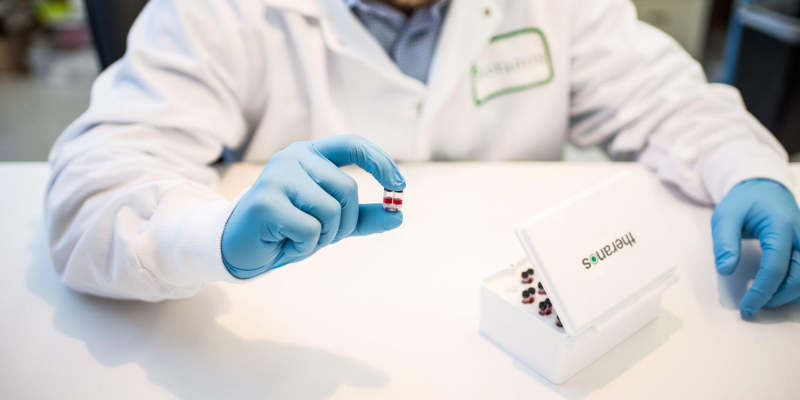
Theranos promised to transform blood testing, performing a wide range of tests using very small amounts of blood. It meant less invasive testing, greater accessibility: an extraordinarily compelling proposition.
But this was healthcare, with consequences for medical decisions, pregnancy and investigations for cancer. The Silicon Valley appetite to “move fast and break things” becomes profoundly troubling when people’s health is at risk.
Patients were offered a clinical testing service they were encouraged to trust; they weren’t knowingly participating in an experiment whose limitations had been explained. Evidence in the criminal proceedings included inaccurate results suggesting that a viable pregnancy was failing, and elevated results on a test used to assess possible prostate cancer, which conventional testing subsequently contradicted.
When PR and publicity become part of the problem
The deception went well beyond confidence in a technology that hadn’t fulfilled its potential.
Holmes admitted in court that she personally added pharmaceutical company logos, including Pfizer’s, to reports supplied to Walgreens. These gave the appearance of external endorsement that the companies had not authorised.
Theranos also used other companies’ machines, including Siemens equipment, without adequately disclosing that reliance to investors and Walgreens while promoting its own technology.
Claims that major pharmaceutical companies had comprehensively validated the technology were false, as were claims about its deployment on the battlefield.
These were claims about existing evidence and capabilities. Their significance cannot be explained away as an ambitious founder being excessively optimistic about the future.
Carreyrou also points to private messages disclosed at trial in which Holmes celebrated the success of her press strategy. Coverage was actively cultivated, and it helped give false claims the imprimatur of respected media outlets.
For anyone working in PR, it’s a sobering example of how publicity can confer credibility well beyond what the evidence warrants.
It also raises an uncomfortable question for anyone working in public relations: what happens when a strong media strategy makes a story look more credible than the evidence behind it?
Reputation cannot replace evidence
To be precise about the legal outcome, Holmes was convicted of conspiracy and fraud against investors. She was acquitted of the patient-related charges she faced.
You can bring that context into the cinema and still be receptive to the human being on screen.
That tension is part of what makes the documentary interesting from a PR and reputation management perspective. Reputation, storytelling and persuasion can all influence how we interpret what we see and who we choose to believe. But they cannot change the underlying evidence.
For PR professionals, that distinction matters.
Good PR can help an organisation communicate its story clearly, build trust and make complex information understandable. It can help people understand what an organisation does, why it matters and what it stands for.
But PR should never be used to create the appearance of evidence where evidence does not exist.
The Theranos story is a particularly stark reminder of this because the stakes were so high. This was not simply a case of an ambitious founder making bold claims about a future product. The claims related to healthcare, investors, patients and technology that was presented as already working.
The role of trust in public relations
At its heart, PR is about communication and trust.
Organisations ask the public, customers, investors, journalists or other stakeholders to believe something about them. That trust is built over time through what they say, what they do and whether the two match.
A compelling story can certainly help people understand an organisation. Strong media coverage can build awareness and credibility. But neither can compensate indefinitely for a gap between the story and reality.
That is one of the more uncomfortable lessons from Theranos for the PR industry.
The best reputation management is not about making an organisation look better than it is. It is about communicating what is true, addressing problems honestly and helping stakeholders understand the full picture.
Leave time for the conversation afterwards
Finally, watch it with someone who will happily go down the rabbit hole with you.
You may spend quite some time revisiting particular moments and trying to make sense of what you’ve experienced. Having someone to interrogate it with makes that considerably more interesting.
Allow almost three hours for the film, and leave some room afterwards for the conversation. The credits are unlikely to be the end of it.
And for anyone working in PR, communications or reputation management, it is worth staying for that conversation. The Theranos story raises some difficult questions about persuasion, credibility and the role of the media in shaping what we believe.
Those questions are unlikely to become less relevant any time soon.